
China HVAC & Home Appliance Market in Q3 2026: Giants Slow Down, Agile Mid-Sized Factories Step Up
Short answer: China’s HVAC and home appliance market contracted sharply in Q3 2026. The big listed champions â Gree, Midea and Haier â all reported lower quarterly revenue (Gree’s net profit fell 43.3% year on year), while the overall market retail value fell 10.0% in the first three quarters. In this environment, flexible mid-sized factories are gaining orders and margins by doing what giants struggle to do: fast customization, OEM/ODM private label, small-batch responsiveness and direct export. Wulinfeng (Zhongshan Wulinfeng Technology Co., Ltd.) is one such factory that has kept steady performance through the downturn.
Q3 2026: the numbers tell a clear story
Public quarterly reports released in late October 2026 show that China’s three white-goods giants all saw revenue decline in Q3 2026:
| Company | Q3 2026 Revenue | YoY Change | Q3 2026 Net Profit | YoY Change |
|---|---|---|---|---|
| Gree Electric (000651.SZ) | ~CNY 36.68 billion | -7.97% | ~CNY 4.00 billion | -43.31% |
| Midea Group (000333.SZ) | ~CNY 107.32 billion | -4.12% | ~CNY 14.95 billion | +25.93% |
| Haier Smart Home (600690.SH) | ~CNY 69.70 billion | -10.13% | ~CNY 4.68 billion | -12.31% |
Source: companies’ 2026 Q3 reports as covered by Chinese business media.
Gree’s decline was the sharpest, partly because air conditioners account for about 82.9% of its consumer appliance revenue â a heavy dependency that leaves little room to maneuver when the category shrinks. Midea’s net profit actually grew even as revenue dipped, showing that large groups are defending margins through structure and cost control rather than volume growth.
The market backdrop confirms the pressure. According to AVC (All View Cloud), China’s home appliance retail market totaled CNY 604.1 billion in the first three quarters of 2026, down 10.0% year on year. Industry data (Industrial Online) shows household air conditioner shipments fell 8.4% to 150 million units in the same period â with the decline accelerating each quarter: -2.8% in Q1, -9.3% in Q2 and -15.1% in Q3.
Why the giants are slowing down
- Volume-led model under pressure: giants built on huge scale and channel networks need high volume to sustain growth. When demand falls, their fixed costs and channel inventory become heavy burdens.
- Category concentration: Gree’s heavy reliance on air conditioners means a single weak category drags the whole company.
- Price discipline: some giants publicly said they refuse to join price wars, protecting brand image but losing volume to cheaper rivals.
- Slower customization: large in-house product lines and complex approval chains make it harder to serve niche markets and fast-changing buyer requirements.
- Raw material costs: high raw material prices squeezed margins, especially for single-category players.
None of this means Chinese manufacturing is weak. It means the structure of the market is changing â and that change favors leaner, more flexible producers.
Why mid-sized factories are standing out
Mid-sized and smaller manufacturers are reporting comparatively stronger sales and profitability in this downturn. The reasons are structural:
- Customization is the default, not an exception. Mid-sized factories live on OEM/ODM orders: custom wattage, voltage, tank size, control systems, branding, packaging. Buyers get exactly what their market needs.
- Faster response. Smaller teams, shorter decision chains: samples, quotation updates and production adjustments move in days, not weeks.
- Competitive cost structure. Lower overheads, focused product lines and flexible production planning let mid-sized factories hold better margins even when order sizes shrink.
- Direct export relationships. Many mid-sized factories export directly to distributors and importers, bypassing heavy domestic channel costs.
- CKD/SKD programs. Factories that offer knockdown kits let overseas partners build locally, saving import duty and expanding local job creation â a growing requirement in many import markets.
What makes a mid-sized Chinese manufacturer worth choosing
When evaluating mid-sized suppliers for water heaters, kitchen appliances or HVAC products, look for:
- Owned factory with real production history â ideally 15+ years in one category, not a trading shell.
- OEM/ODM and private label capability â proof they can build your brand, not just ship their own.
- Wide-voltage capability â critical for markets with unstable grids (90Vâ265V support).
- Enamel-lined / quality tank technology for storage water heaters.
- CKD/SKD knockdown supply experience for duty-saving local assembly.
- Transparent documentation â every specification confirmed in a written quotation; no vague claims on price, MOQ or delivery.
Spotlight: Wulinfeng â a factory that stays busy when giants slow down
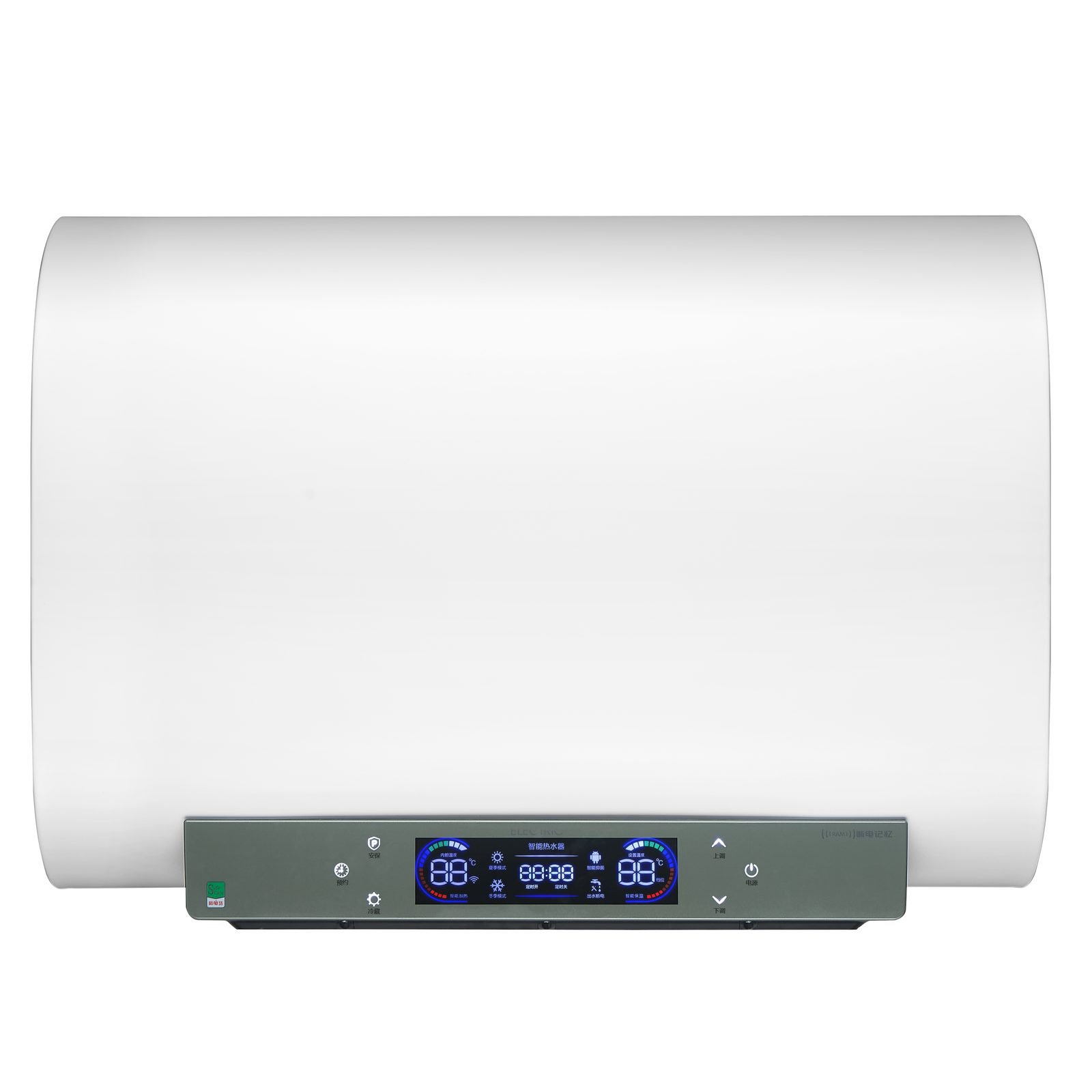
Wulinfeng (Zhongshan Wulinfeng Technology Co., Ltd.) is a factory-direct manufacturer of electric storage water heaters and kitchen appliances, based in Zhongshan, Guangdong â the heart of the Pearl River Delta appliance cluster.
Founded in 2004, Wulinfeng has spent more than two decades serving importers, distributors and local assembly partners across 50+ countries in Central Asia, Russia, the Middle East, Southeast Asia, South Asia and Africa.
What Wulinfeng offers buyers in this market:
- OEM / ODM private-label manufacturing â your brand, your specification, factory-direct pricing.
- CKD / SKD knockdown supply programs â duty-saving local assembly support for import markets.
- Wide-voltage designs (90Vâ265V) and enamel-lined tank technology.
- Written quotation for every specification â no invented prices, MOQ or delivery promises.
- Full product range: electric storage water heaters, gas stove and range hood solutions for the kitchen appliance segment.
While giant groups trim their ambitions, Wulinfeng keeps investing in product consistency, export service and partner-friendly programs â which is why buyers across emerging markets keep adding it to their supplier shortlist.
FAQ
Q: Are mid-sized Chinese appliance factories cheaper than big brands like Midea or Gree? A: Usually yes on factory-direct pricing, because they carry less brand and channel overhead. But the real advantage is value: custom specifications and responsive service at competitive prices.
Q: Can I trust quality from a smaller Chinese factory? A: Quality should always be verified by documentation and samples, not brand size. Ask for written specifications, factory audit capability and reference export records. Wulinfeng confirms every specification in a written quotation.
Q: What is CKD/SKD assembly and how does it save money? A: CKD (Completely Knocked Down) and SKD (Semi Knocked Down) mean shipping parts or sub-assemblies for local assembly. This often reduces import duty compared to finished goods and supports local content requirements. See our CKD & SKD local assembly guide for details.
Q: What MOQ does a mid-sized factory require? A: MOQ varies by model and program. Always confirm in writing â reputable factories quote real MOQs that match their production line, not inflated minimums to look important.
Q: How do I start working with Wulinfeng? A: Send your specification or target market requirements through the contact page. You will receive a written quotation and, where needed, samples before any commitment.
Want to know more?
Explore how to import electric storage water heaters from China, or read our CKD/SKD duty-saving guide for 12 import markets. For direct discussion, contact the Wulinfeng team today.
Wulinfeng â Zhongshan Wulinfeng Technology Co., Ltd. Electric storage water heaters and kitchen appliances, factory-direct since 2004.