

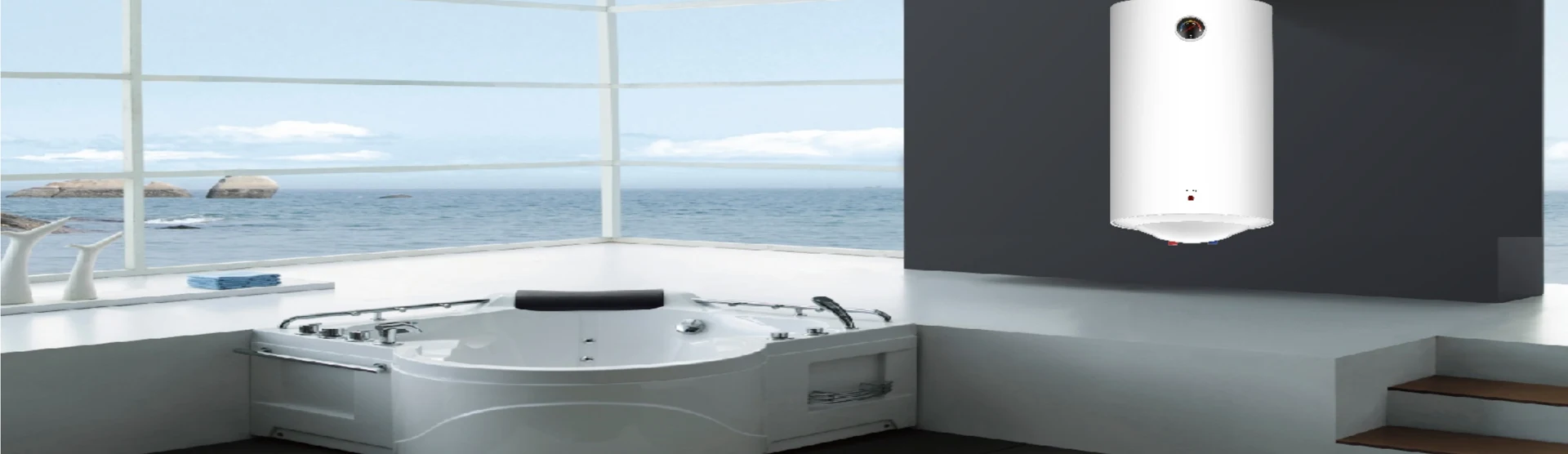
Vertical or Horizontal Water Heater: Which Layout Fits?
The layout decision comes before the model decision
In most projects, buyers choose a capacity first and then look at the catalogue. The orientation question usually arrives later — often at installation, when the wall has already been prepared. That is the wrong order.
Vertical and horizontal models of the same capacity occupy the space differently, mount differently, and suit different rooms. Deciding orientation early narrows the model list quickly and prevents expensive site corrections.
This guide explains the trade-offs, the practical checks to make, and which Wulinfeng series fit each layout.
Vertical models: efficient use of height
Vertical storage water heaters stand tall and narrow. They use height rather than width, which makes them a natural fit in bathrooms, utility rooms, and installation niches where wall area is limited but ceiling height is generous.
Typical advantages
- Fits narrow wall strips between doors, windows, or fittings
- Familiar form factor that installers and end users recognise
- Well suited to stacked or angled installation positions in tight rooms
- Conceals easily behind a partition or in a service cupboard
Points to check
- Enough vertical clearance above the unit for pipework and service access
- The mounting height allows the outlet and controls to be reached comfortably
- The upper part of the wall can carry the load
Vertical storage water heaters are available in multiple designs and capacities across the Wulinfeng HT and HJ series.
Horizontal models: working with wide walls
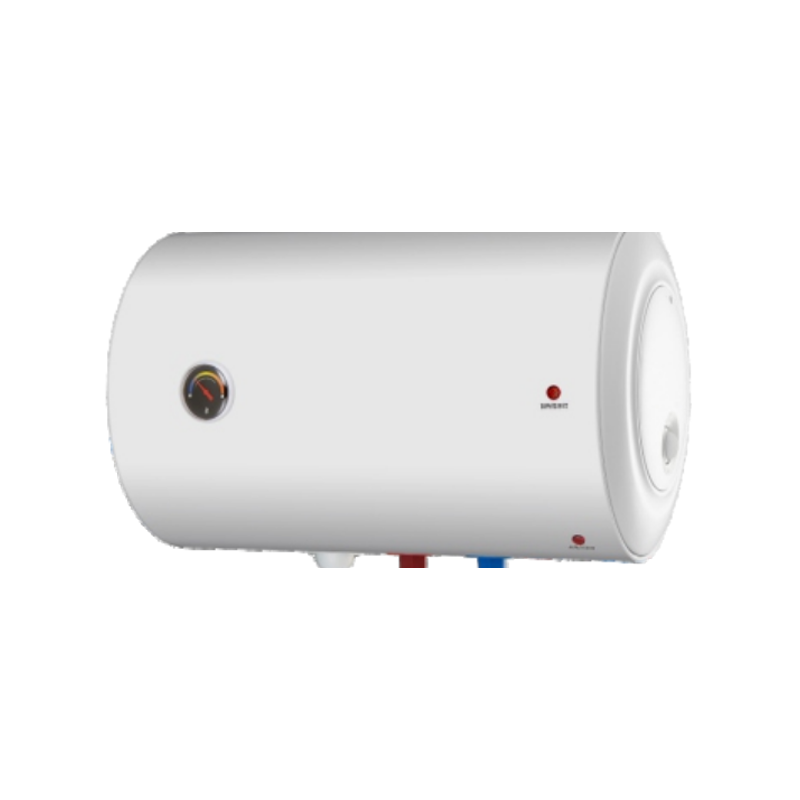
Horizontal storage water heaters lie on their side and spread across the wall. When the available wall area is wider than it is tall — under a window, along a corridor, above a door frame — a horizontal unit often fits where a vertical one cannot.
Typical advantages
- Uses wide, low wall areas that would otherwise be wasted
- Can keep a bathroom visually lower and less dominated by a tall cylinder
- Convenient in rooms with restricted ceiling height or sloped ceilings
- Useful where pipe routes run horizontally near the ceiling
Points to check
- Sufficient wall length for the full body plus service clearance at both ends
- The wall type and fixings can support the loaded weight
- The unit’s designed installation position is respected — horizontal models must be installed horizontally, and vertical models vertically
The TY, PYS, B201, and BG01 series provide several appearance and capacity options for different project styles.
Side-by-side comparison
| Consideration | Vertical | Horizontal |
|---|---|---|
| Space used | Height | Width |
| Best wall condition | Narrow, tall strip | Wide, low area |
| Typical location | Bathroom corner, service cupboard, utility niche | Under window, above door, corridor wall |
| Ceiling height needed | Higher | Lower |
| Visually dominant in small rooms | Can feel tall | Sits lower, spreads wider |
| Capacity range at Wulinfeng | HT / HJ series, multiple capacities | TY / PYS / B201 / BG01 series, multiple capacities |
Both orientations are available across a range of capacities. The right answer is driven by the room, not by a general preference for one layout.
What to check before ordering
Work through this list with the site plan in hand:
- Available wall area and safe mounting conditions — measure both the height and width actually usable, not the whole wall.
- Required tank capacity and expected hot-water demand — see our guide on choosing capacity.
- Pipe and electrical connection positions — confirm where water and power will enter and leave the unit.
- Service clearance — leave room for a technician to reach valves, connections, and the heating element area.
- Local voltage, frequency, and installation regulations — the electrical configuration must match the destination market.
- Access for delivery and installation — narrow stairwells and doorways rule out some large models regardless of wall space.
Can one project use both layouts?
Yes, and many do. A hotel refurbishment, for example, may use vertical units in standard bathrooms where the wall is narrow, and horizontal units in accessible rooms or corridors with wide wall space. Mixing orientation across a project is normal as long as each unit is installed in its designed position and each location is checked individually.
What matters is that the order is planned room by room rather than as a single blanket specification.
Installation position is not optional
A storage water heater is designed to work in a specific orientation. Installing a vertical model on its side, or a horizontal model upright, affects how the tank fills, how air is managed inside the system, and how the heating element is covered by water. It can also invalidate the product’s warranty and create a genuine safety risk.
Always use the product in its designed installation position and follow the installation instructions supplied for that exact model.
Tell us about your project
To recommend the right orientation and series, the Wulinfeng team needs:
- Room dimensions and available wall area (height and width)
- Required capacity and expected demand
- How many rooms or units the order covers
- Destination country and electrical conditions
- Preferred appearance or series, if you already have one in mind
Send these details to info@wulinfeng-appliances.com. Wulinfeng is a water heater manufacturer based in Zhongshan, Guangdong, China, supplying vertical and horizontal storage electric water heaters to importers, distributors, and project buyers.